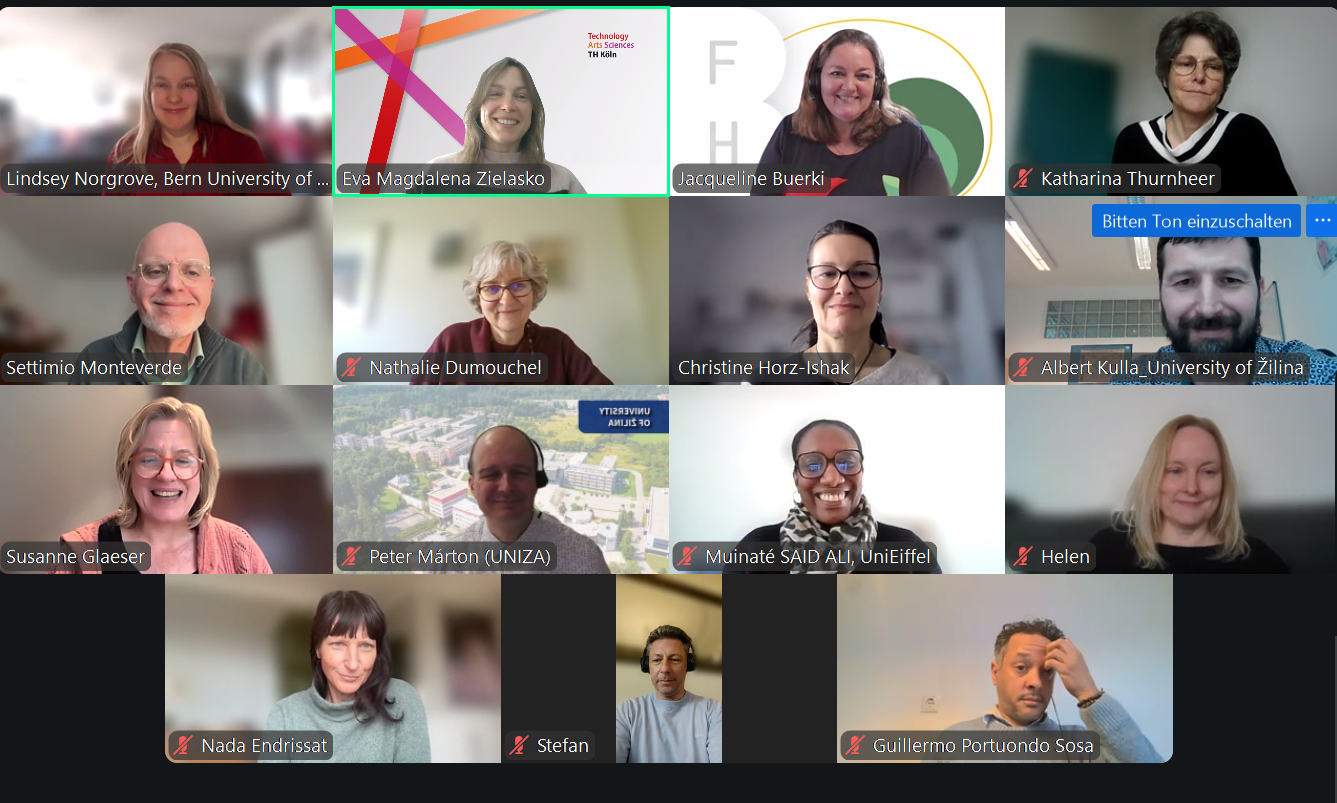
International teaching collaborations often involve more than simply connecting courses; they require coordination across disciplines, shared learning goals, and careful planning. Lecturers from the PIONEER Alliance explored this process firsthand during the online workshop “How do I teach a COIL?”, which took place on 30 March 2026.
The workshop was led by Jacqueline Bürki (Bern University of Applied Sciences Business School) and Susanne Glaeser (Head of the Digital Team at TH Köln Center for Academic Development).
COIL – Collaborative Online International Learning – enables students from different countries to collaborate online on joint projects, gain international experience and develop teamwork as well as digital literacy skills alongside subject-specific knowledge. It does not require physical mobility, thus creating inclusive, cross-university digital learning spaces for the development of intercultural competences.
Simulating the COIL Design Process
Participants began with an asynchronous preparation phase, engaging with materials on COIL pedagogy, learning outcomes, digital tools, and intercultural learning. During this stage, they also explored digital collaboration tools such as Miro and Padlet to develop initial course ideas.
Next, participants were paired with international co-teachers to design one integrated COIL teaching session. Rather than preparing separate lessons, pairs defined shared learning outcomes, combined disciplinary and cultural perspectives, and developed interactive activities for genuine student collaboration.
For the simulation on 30 March, each teaching pair delivered a 20-minute interactive sequence including an icebreaker, a collaborative task – often using breakout rooms – and a follow-up activity. Other participants acted as students and provided structured feedback.
The simulation also highlighted the challenges of international collaboration. Different disciplinary backgrounds, teaching traditions, time zones, varying academic calendars, and asynchronous preparation required negotiation, compromise, and extra effort.
By simulating all phases of a COIL, the workshop offered lecturers practical, hands-on insight into the planning, coordination, and collaboration required for successful international teaching projects. Christine Horz-Ishak, one of the participating lecturers, described the workshop as “a great experience, from the perspective of hands-on, interdisciplinary co-teaching,” adding that taking part was “definitely a good idea before starting with a real COIL.” Her reflections highlight how actively engaging with the COIL process can foster both practical skills and confidence, providing a strong foundation for future collaborative teaching initiatives.
The next PIONEER COIL workshop with Jacqueline Bürki and Susanne Glaeser will take place on 30 November 2026 online. If you want to participate or have any other questions, please contact coil-projects@th-koeln.de.
Author: TH Köln
Image: ZLE TH Köln